

This is the default rich text value


.jpg)
.jpg)
.jpg)
.jpg)
.jpg)
.jpg)
.jpg)
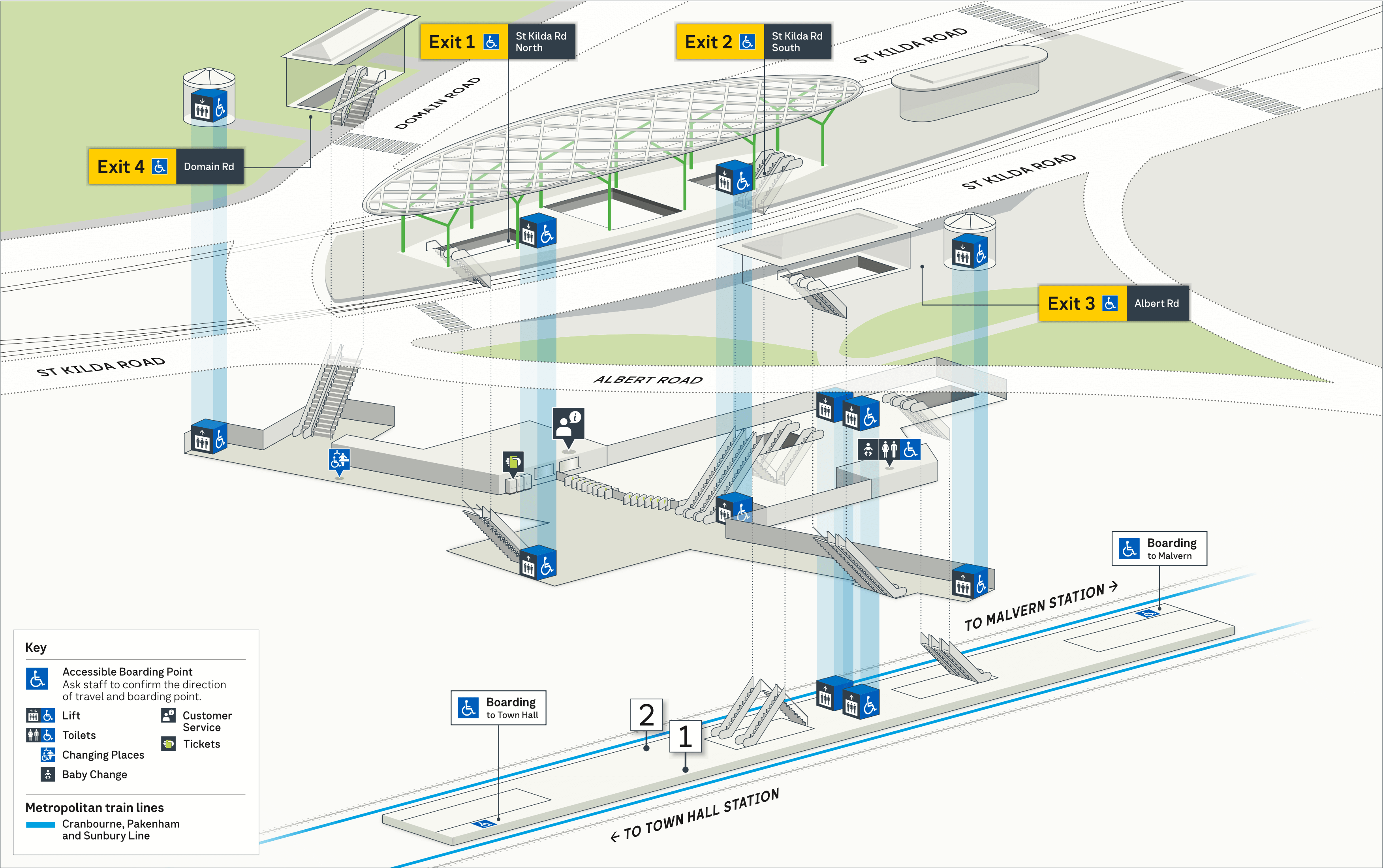
Anzac Station is located directly under St Kilda Road, near the intersection of Albert and Domain Road. The station has four entrances:
– On the outer edge of the Shrine of Remembrance Reserve
– Albert Road Reserve
– Two entrances at the new Domain train/tram interchange directly above the station on St Kilda Road
.jpg)
Raafat Ishak’s bright and colourful artwork, Future Wall Painting, is printed onto the glass wall panels in the Albert Road entrance to Anzac Station.
In Future Wall Painting, Ishak celebrates the architectural and cultural landmarks of the St Kilda Road precinct through abstract forms and geometric drawings. While essentially abstract, the artwork contains references to Australian pre-contact, colonial, and military histories as well as architectural references to monuments and buildings associated with the St Kilda Road ceremonial boulevard. Native fauna and flora are dispersed throughout the design in a nod to the boulevard's pre-colonial landscape.
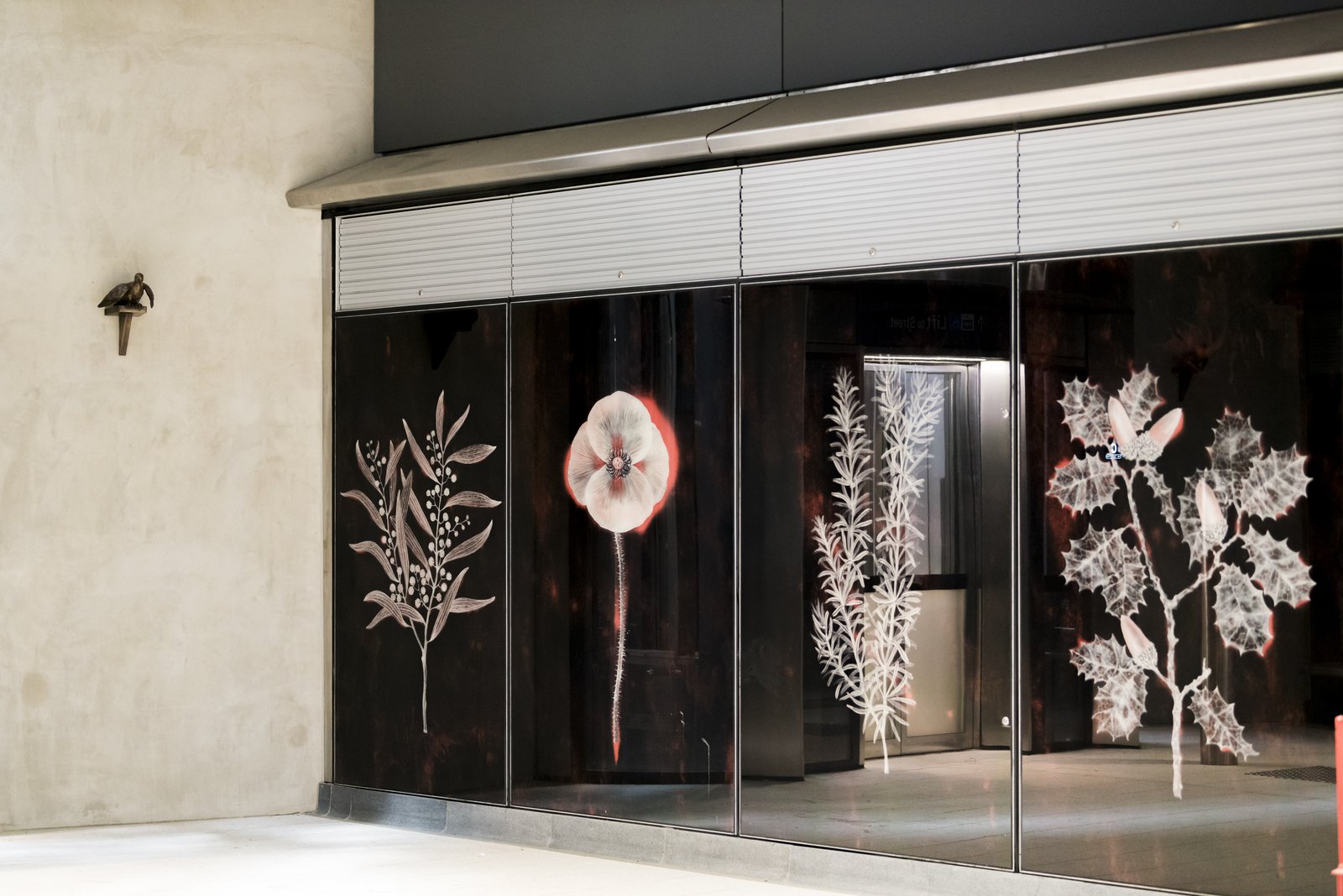
Fiona Hall’s artwork at Anzac Station celebrates military service through the story of two Victorian-bred carrier pigeons, awarded the animal equivalent of the Victoria Cross.
Bronze sculptures of the pigeons perch on either side of the station’s entrance from the Shrine of Remembrance Reserve.
The artwork also includes images of plant species with links to Australia’s military history, etched on glass wall panels on either side of the pigeons. The plants include Lone Pine, Gallipoli Oak, Gallipoli Rose, Flanders Poppy, Lombardy Poplar and Rosemary – all species that grow where Australians fought at Gallipoli and on the Western Front during the First World War.
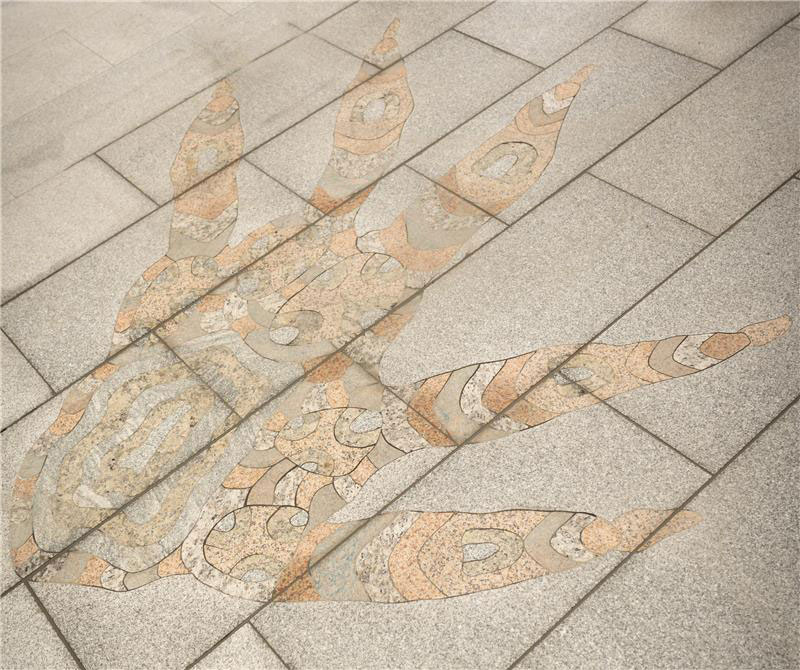
Celebrated Victorian First Nations artist, Maree Clarke, has created Tracks – a line-wide artwork that spans all 5 stations. Clarke’s artwork showcases native fauna found across the traditional lands and waters of the 5 Kulin Nation clans – Wadawurrung, Dja Dja Wurrung, Taungurung, Wurundjeri Woi-wurrung, and Bunurong / Boonwurrung. Maree’s artwork comprises large scale floor mosaics created from coloured granite. The granite was cut using a waterjet, with each piece finished and assembled by hand. There are a total of 35 footprints featured across the 5 station platforms.
The footprints at each station have been chosen by the artist from native animals (living and extinct) found in the different natural habitats across Kulin Nation Country, which includes Greater Melbourne and parts of south-central Victoria.
The design for the area around the station’s Albert Road entrance integrates First Nations cultural narratives and honours Traditional Owners through Indigenous vegetation, wetland features, and use of Boonwurrung words associated with water engraved into stone seating. Rainwater is harvested through garden beds and paving design ensuring a strong connection to the land and Aboriginal cultural practices. A dedicated pavilion designed by First Nations architect Jefa Greenaway and taking its inspiration from the leaves of the Sheoak, has been installed in the revamped Albert Road Reserve. Rainwater from the shelter feeds a water bowl, representing a 'tarnuk' - a traditional wooden container used for collecting water.

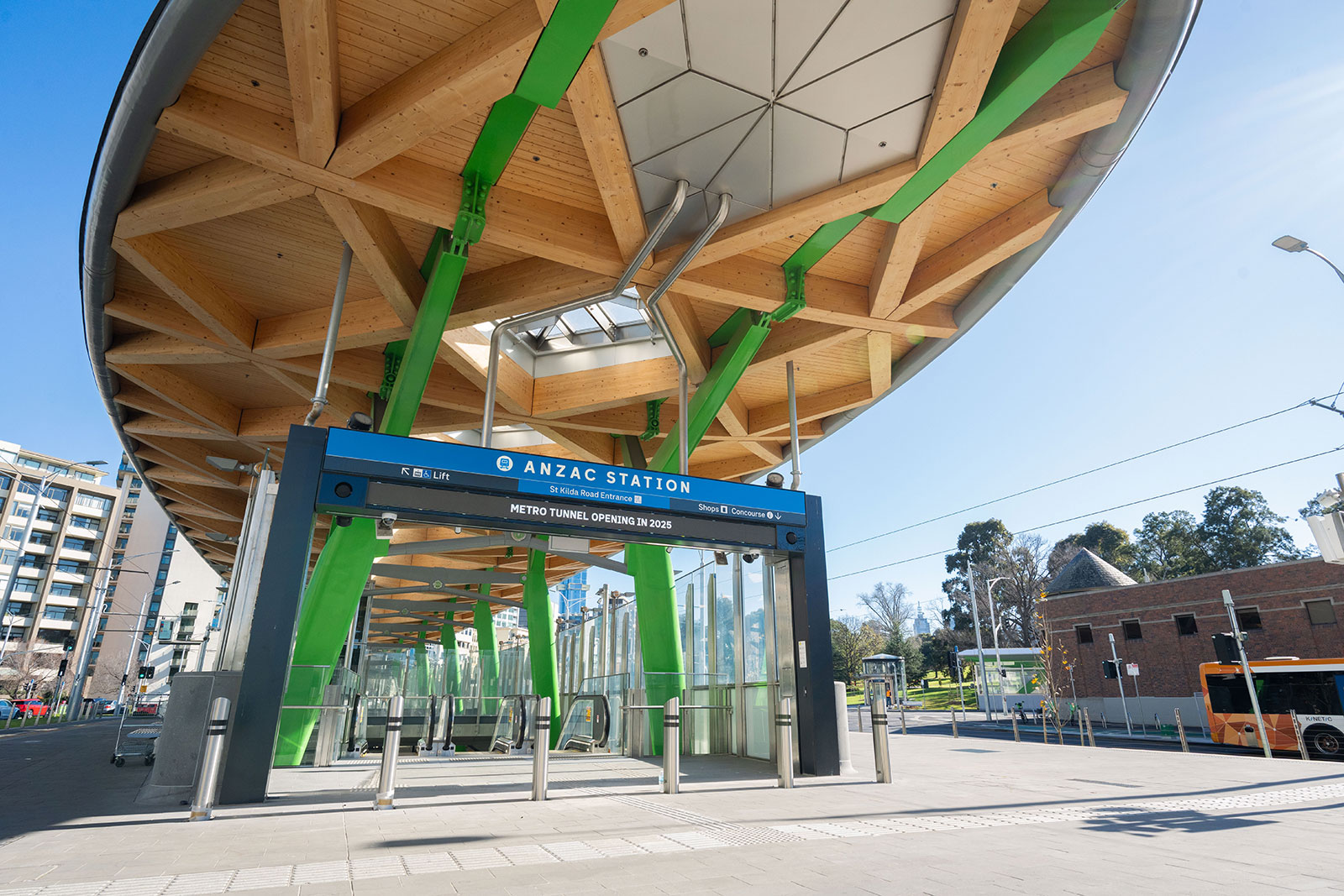
Anzac Station’s distinctive timber canopy is 85 metres long and 23 metres wide. It’s designed as a pavilion in the park that blends into its leafy surrounds. The canopy sits on massive steel columns up to 17 metres above the station concourse, its skylights drawing in natural light. Entrances on either side of St Kilda Road create a pedestrian underpass below the busy road, making it safer and easier to cross.
Visit transport.vic.gov.au to plan your trip

Looking for high-visibility advertising space, access to a captive retail audience, a space to host an event, deliver an impactful brand activation or producing a filming or photography project?
Our team will help you bring ideas to life across the MetroTunnel Stations - connecting your brand with thousands of commuters and visitors every day.